2026-10-20
Vitiligo Treatment Duration and Methods: What to Know Before Treatment, Including Pallas Laser | Seocho Dermatology
A guide to vitiligo treatment options, including topical medication, UVB phototherapy, and Pallas laser, with selection criteria, typical treatment duration, and care tips during treatment.
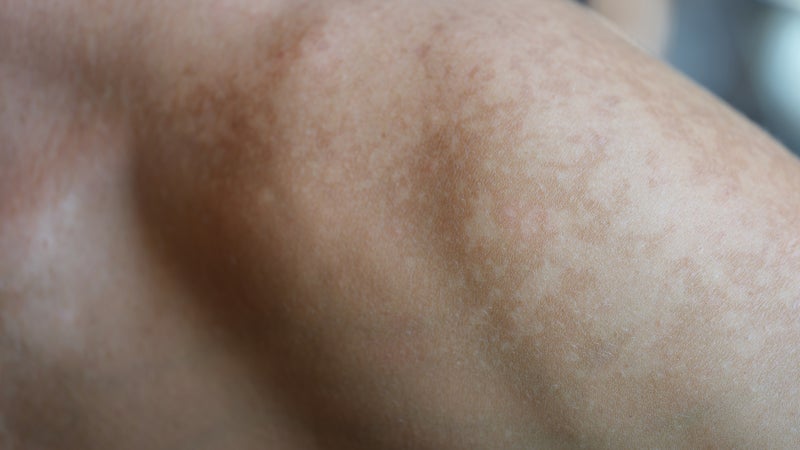
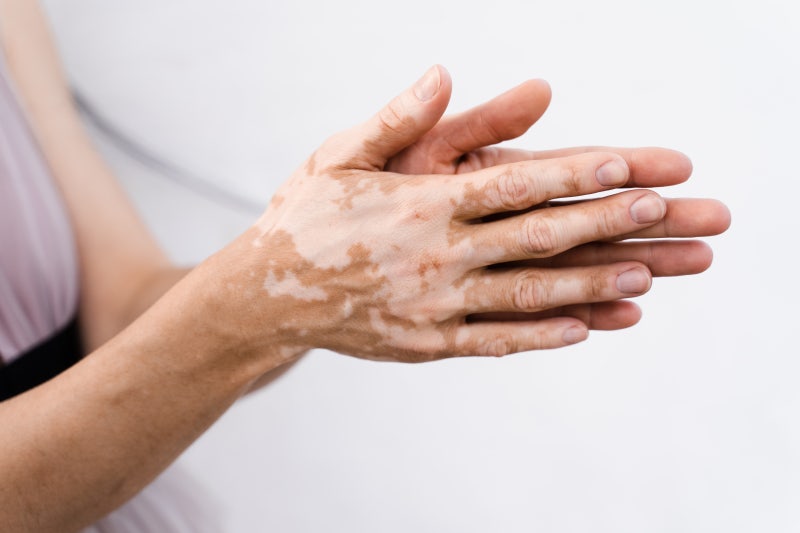
Back of a hand and fingers with irregular white patches where the skin has lost its pigment.
The questions people ask most often after being diagnosed with vitiligo, or when they suspect they have it, are these: "What kind of treatment should I get?", "How long will it take?", and "Will my skin color come back if I get treated?"
Vitiligo treatment is not limited to a single method. The approach and combination of treatments vary depending on the location, extent, and progression of the lesions. Today, we cover the types of vitiligo treatment and how they differ, the criteria for choosing a method, including Pallas laser, how long treatment takes, and questions that often come up during treatment.
What this article covers
What is the goal of vitiligo treatment?
Vitiligo treatment methods at a glance
Medication therapy
UVB phototherapy
Pallas laser treatment
Which treatment suits your condition? Selection criteria
How long does vitiligo treatment take?
What to watch out for during treatment
Frequently asked questions
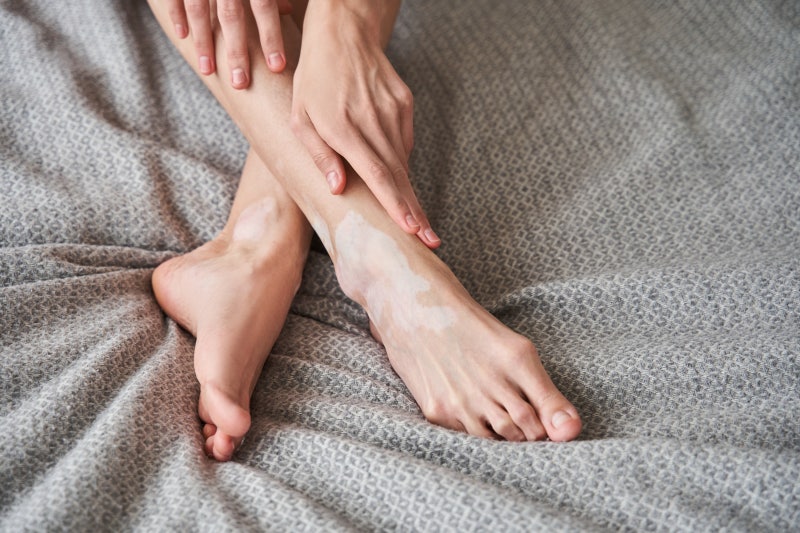
Feet and ankles showing white depigmented patches on the skin.
1. What is the goal of vitiligo treatment?
Vitiligo treatment generally pursues two main goals.
Stabilizing progression: controlling the patches so they do not spread or new ones do not appear.
Encouraging pigment recovery: helping melanocytes become active again.
Treatment often addresses both goals together, and the response depends on the location, the condition of the lesions, and the individual. Even within the same person, some areas, such as the face, tend to show a relatively good response, while others, such as the fingertips and toes, respond more slowly. For this reason, progress is tracked separately by area.
2. Vitiligo treatment methods at a glance
Category | Topical medication | Narrowband UVB | Pallas laser |
Method | Medication applied directly to the lesions | UVB light applied over a wide area | Localized treatment using a laser |
Usually considered for | Small areas or early-stage treatment | Lesions in several areas or a wide affected area | Lesions in one or two spots or a limited area |
Advantages | Can be managed at home | Treats a wide area at once | Focuses on the lesion site |
Considerations | Skin reactions need to be checked depending on the area and duration of use | Regular visits needed at consistent intervals | Treatment may take a long time for large areas |
Combination | Often combined with light therapy | Can be combined with medication | Can be combined with medication |

A woman's shoulder and upper back with wide white patches of depigmented skin.
3. Medication therapy
Topical steroids, calcineurin inhibitors, and other medications applied directly to the lesions may be used. They are often chosen when the lesions are small or treatment is in its early stages, and they are sometimes used together with light therapy.
However, depending on the type of medication, how long it is applied, and the area treated, the skin can thin or become irritated. Medications must be used exactly as prescribed and as instructed. Please do not stop them on your own or extend how long you use them.
4. UVB phototherapy
This method uses UVB light of a specific wavelength to regulate the skin's immune response and promote pigment recovery. It is widely used in vitiligo treatment and can be considered when lesions are spread across several areas or cover a large area. Because treatment is given repeatedly at set intervals, consistent clinic visits are important. The number of sessions and the interval depend on your skin condition, so please ask for guidance at your appointment.
Close-up of skin with uneven tone, showing small pale spots scattered among darker areas.
5. Pallas laser treatment
At Alive Dermatology, we provide vitiligo treatment using the Pallas laser. When the lesions are limited in location and extent, localized treatment, including the Pallas laser, can be considered. A board-certified dermatologist first checks the location, extent, and progression of the lesions, and then explains a treatment plan tailored to you.
6. Which treatment suits your condition? Selection criteria
Below are common factors to consider. The actual choice is made after your examination.
Factor | Impact on treatment choice |
Lesion area | If there are one or two spots, localized treatment is considered first. If several areas are affected, broader treatment is considered first. |
Location | Treatment response varies by area, such as the face or neck, so the way progress is monitored differs. |
Progression | If the patches have been spreading quickly, stabilizing progression takes priority. |
Onset | The treatment approach is adjusted depending on whether the lesions appeared relatively recently. |
Lifestyle factors | How often you can visit the clinic, whether you can use topical medication, and similar factors. |
That is why, during your appointment, we review photos of the lesions, when they appeared, how quickly they are changing, and your previous treatment history.

The clinic's lobby, with a reception desk and a waiting area in soft beige tones.
7. How long does vitiligo treatment take?
This is the question we get asked most often, but it is difficult to give a single answer for how long treatment will take.
Pigment recovery can take several months or longer.
Not seeing any visible change in the first few weeks does not necessarily mean the treatment is not working.
On the other hand, some areas may respond quickly.
Even after treatment ends, patches may recur or new lesions may appear, so progress is monitored over time.
For that reason, rather than judging results after one or two sessions, it is necessary to watch progress over a set period and adjust the treatment approach along the way. If you stop midway on your own, it becomes difficult to evaluate the progress so far. If you have any concerns, please consult us before stopping.
A private treatment room with a reclining treatment chair, a stool and a cabinet.
8. What to watch out for during treatment
Sun protection: skin lacking pigment burns easily in the sun. Protect it with sunscreen, a hat, and long sleeves.
Avoid friction and injury: new lesions can appear in areas that are repeatedly irritated, so avoid scrubbing and tight clothing.
Keep to your treatment schedule: consistency is key in light therapy.
Be wary of folk remedies: unverified products or harsh methods can damage the skin.
Keep a record of changes: taking photos regularly under the same lighting and angle makes it easier to track progress.
9. Vitiligo Treatment FAQ Vitiligo treatment at Seocho Dermatology
Q1. Will vitiligo treatment completely cure it?
Treatment can help restore pigment, but not every patch responds the same way, and recurrence is possible. It is best to think of vitiligo in terms of ongoing monitoring and management rather than a complete cure.
Q2. Can I just use medication?
For small or early-stage lesions, treatment may start with medication alone. Depending on the extent and condition, light therapy may also be combined with it. This is decided after your examination.
Q3. Can the patches look whiter during treatment?
If the surrounding skin tans from sun exposure, the patches may look more noticeable. This is why sun protection is so important.
Q4. If I have lesions in several places, can I receive only Pallas laser treatment?
If the affected area is wide, other methods such as narrowband UVB may be recommended. At Alive Dermatology, we will suggest a treatment method suited to your condition after your examination.
Q5. When is the best time to start treatment?
If lesions are newly appearing or spreading, it is best to see a doctor as soon as you notice the change so your current condition can be checked.