2026-10-03
Vitiligo in Seocho: What to Check First When You Notice White Patches
Discover how to identify vitiligo, differentiate it from other hypopigmented conditions, and learn what diagnostic steps are taken for early management in Seocho.

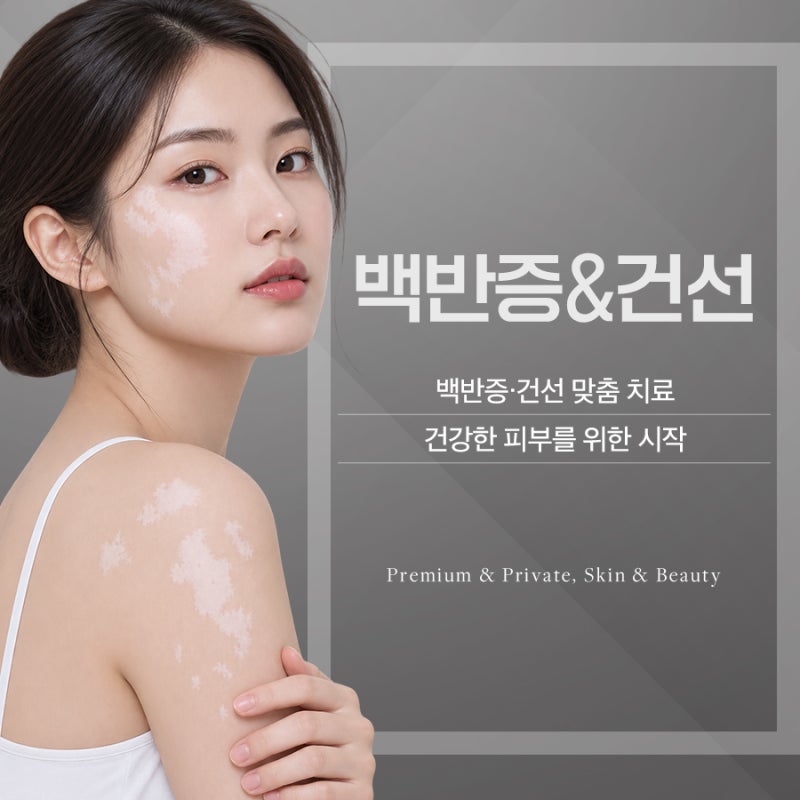
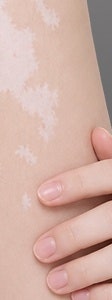
Have you ever looked in the mirror and felt startled to see an unusual white patch on your skin? At first, many people dismiss it simply as a slight loss of pigment. However, if the borders remain sharply defined over time or gradually seem to expand, it is important to explore other possibilities. Many who come across this article while searching for vitiligo care in Seocho share these very questions during the initial stages.
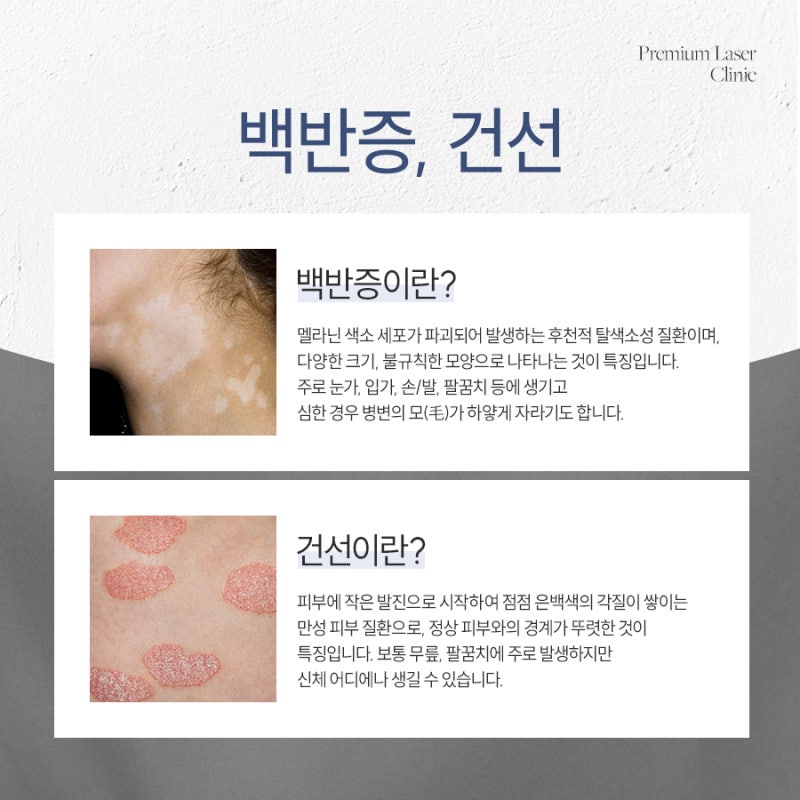
Vitiligo is a chronic skin disorder where well-demarcated white spots develop as melanin-producing cells (melanocytes) lose their normal function. While its exact cause is not yet fully understood, it is widely thought to involve an autoimmune reaction in which the body's immune system attacks its own pigment cells. Factors such as genetic predisposition, repeated friction or skin irritation, and psychological stress are also known to influence its onset or progression.
Types of Vitiligo — Seocho Vitiligo
Vitiligo is classified into several types depending on how symptoms manifest:
Segmental: Confined to one side or segment of the body; typically develops at an earlier age and tends to progress relatively rapidly.
Non-segmental: Often symmetrical on both sides of the body; more common in adulthood and typically progresses at a gradual pace.
Focal: Limited to one or a few localized areas.
Because the classification influences how the condition is monitored and managed, determining the exact type is an essential part of the clinical assessment.
Common Sites and Characteristics — Seocho Vitiligo
Vitiligo frequently appears in areas subject to repeated friction or sun exposure, such as the face, neck, backs of hands, elbows, knees, and finger knuckles. It can also appear around the eyes or mouth, and when present on the scalp, the hair growing within the patch may also turn white. It often begins as small spots before expanding or appearing simultaneously across multiple areas.

Self-Check Characteristics — Seocho Vitiligo
Are the borders sharply demarcated from surrounding skin?
Are there no subjective symptoms like itching or pain?
Has the patch changed in size or number over time?
Does anyone in your family have a history of similar skin changes?
Does it repeatedly appear in specific regions (e.g., joints, facial areas)?
Meeting these criteria does not definitively confirm vitiligo. Other skin conditions—such as tinea versicolor (pityriasis versicolor) and pityriasis alba—can look similar to the naked eye, making a professional clinical evaluation the safest way to ensure an accurate differential diagnosis.
Comparing Easily Confused Skin Changes — Seocho Vitiligo
Category | Vitiligo | Tinea Versicolor |
Border | Sharp and distinct | Relatively faint or blurred |
Surface | Smooth | May have fine scaling |
Common Sites | Face, hands, joints, etc. | Neck, back, chest, etc. (Sebum-rich areas) |

How Is It Diagnosed? — Seocho Vitiligo
During the consultation, a dermatologist first evaluates the shape, margin, and distribution of the lesions under regular light, followed by a Wood's lamp examination using specialized ultraviolet illumination to define the extent of depigmentation more clearly. If necessary, a skin biopsy or blood tests may be conducted to screen for concurrent autoimmune conditions, such as thyroid disease. These diagnostic procedures help confirm vitiligo while ruling out other mimicking skin disorders.
Frequently Asked Questions (FAQ) — Seocho Vitiligo
Q. What are the earliest symptoms of vitiligo?
It usually starts as a small, well-defined white patch and is typically not accompanied by pain, itching, or other subjective symptoms.
Q. Is vitiligo hereditary?
While having a family history increases the relative risk, it can still develop without any genetic background, meaning genetics are not an absolute factor.
Q. Are there potential side effects during vitiligo management?
Phototherapy, for example, can occasionally trigger temporary skin irritation or erythema (redness), which makes regular dermatological monitoring essential throughout the process.
Q. Can I leave the patch alone if it is very small?
Regardless of size, if a new white patch appears or begins to change, undergoing a differential diagnosis is recommended. Early assessment is far more beneficial for determining an optimal management plan than leaving it unaddressed.
Q. How does a consultation proceed?
It relies primarily on visual examination and Wood's lamp inspection, with skin biopsies or blood tests added as needed to rule out other possible conditions.