2026-10-20
Seocho Vitiligo: What to Check If White Patches Keep Spreading
A guide to Seocho vitiligo covering how it develops, signs that white patches are spreading, treatments such as narrowband UVB and topical drugs, and daily sun protection.


If white patches suddenly appear on your skin, it's easy to assume it's just a change in pigment. Even if they start out looking like small spots, it's worth looking into the cause if they grow larger over time or similar patches appear on other areas of the body.
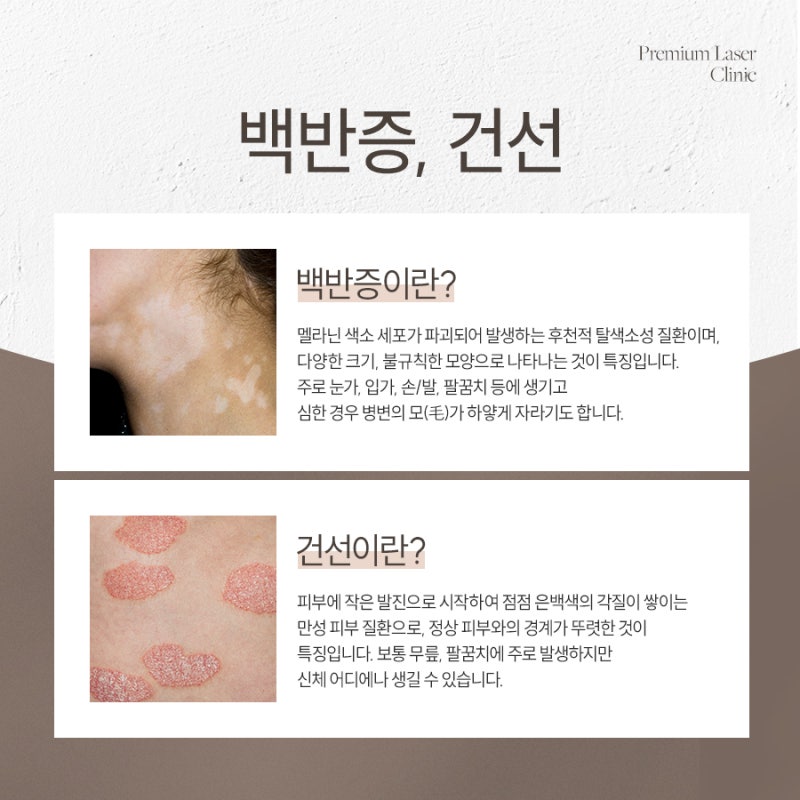
In particular, if an area of skin is noticeably lighter than the surrounding skin and the border is relatively distinct, vitiligo may be a possibility. Vitiligo is a condition in which part of the skin turns white because the melanocytes, the cells that produce skin color, are lost. It often causes no pain or itching, so it can go unnoticed for a while. Today, for those looking into Seocho vitiligo, we'll go over the key features of vitiligo, treatment options, and what to watch for in daily life.
1. What causes vitiligo?
Skin color is influenced by melanin, the pigment produced by melanocytes. Vitiligo is a condition in which pigment disappears from part of the skin because these melanocytes are destroyed or lose their function. It can appear on various areas, such as the face, backs of the hands, arms, and around the mouth, and it sometimes develops in a similar pattern on both sides of the body.
The exact cause of vitiligo has not yet been fully identified, but an autoimmune mechanism, in which the immune system affects melanocytes, is widely considered to be a major factor. Genetic predisposition and environmental factors may also be involved. In some cases, new lesions also appear in areas where the skin has been injured or subjected to repeated friction.
However, not every white patch is vitiligo. Other skin conditions, such as pityriasis alba or tinea versicolor, can look similar, so an accurate diagnosis is necessary.
2. Can white patches spread?
The course of vitiligo varies from person to person.
In some cases, the size of the patches barely changes for a long time,
while in others, existing patches may grow or new lesions may appear within a short period.
For that reason, it is difficult to judge how the condition will progress based solely on the fact that a patch is small when first noticed.
If you notice any of the following changes, it's a good idea to have your skin checked:
Part of the skin has turned noticeably white compared with the surrounding area
Existing patches are increasing in size or number
Patches appear on several areas, such as the face, hands, or around the mouth
The color of hair or eyebrows growing in the affected area also changes
Vitiligo is not contagious, and it doesn't necessarily spread just because it's left untreated.
However, since it's hard to judge progression on your own, it's best to get checked by a doctor if you notice any changes that concern you.
3. How Is Seocho Vitiligo Treatment Carried Out?
Vitiligo treatment is decided by considering the location and extent of the lesions, when they appeared, and whether they have recently progressed.
Topical Drug Therapy
Topical steroids or calcineurin inhibitors applied to the affected area may be used. The type of medication and the duration of use vary depending on the body area and skin condition, so they should be used according to your healthcare provider's prescription and instructions.
Phototherapy
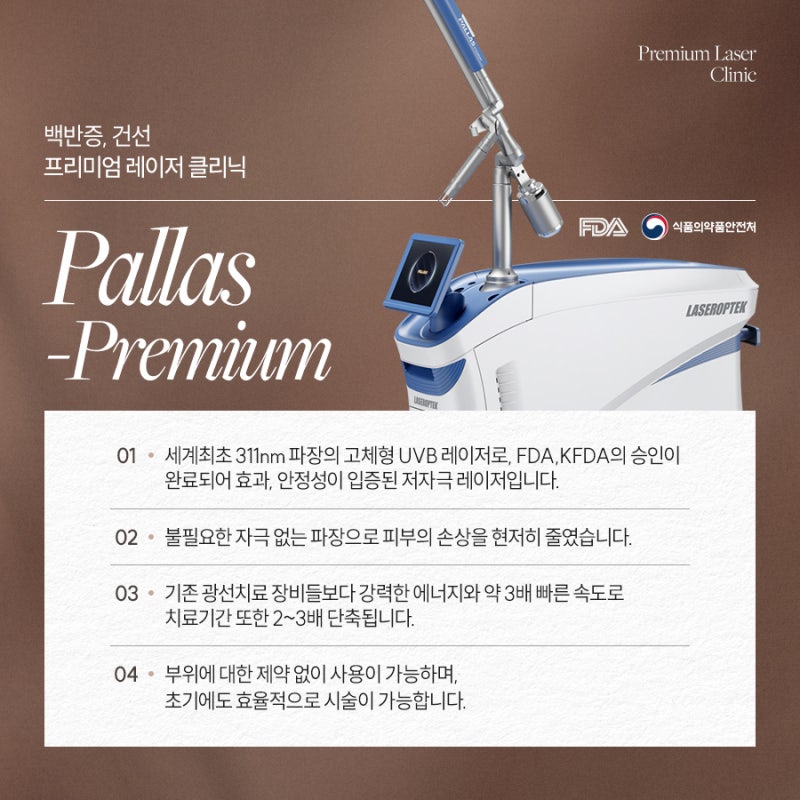
Narrowband UVB therapy, which uses narrow-wavelength ultraviolet B light, is a representative treatment for vitiligo. Its goal is to regulate the skin's immune response and promote pigment recovery. Depending on the location and extent of the lesions, full-body phototherapy or treatment targeted to specific areas may be considered.
Localized Phototherapy and Other Treatments
If the lesions are limited to a small area, localized phototherapy such as the excimer laser may be considered. Other medications may be combined depending on the condition. How much pigment returns after treatment varies from person to person, and the response can also differ by body area, such as the face and neck. Rather than judging results in a short period, the treatment plan needs to be adjusted while monitoring progress over time.
4. Daily care matters alongside treatment.
Skin affected by vitiligo may be more vulnerable to sun damage because it lacks pigment. For that reason, it's a good idea to use sunscreen consistently and protect your skin with a hat or long clothing. It's also important to avoid repeated friction or injury to the skin, since some patients develop new lesions after such irritation.
Stress and lack of sleep cannot be definitively identified as direct causes of vitiligo, but a regular routine and adequate rest help with overall health management. Above all, avoid unproven folk remedies or harsh products that could cause further damage to your skin.

5. If you suspect vitiligo, get checked early.
Vitiligo can be treated in a way that allows pigment to recover, but not all lesions respond in the same way. Treatment results can vary depending on the affected area and stage of progression, and there is also a possibility of recurrence or new lesions. For that reason, rather than assuming every white patch is vitiligo or dismissing it as a temporary change, it's important to get an accurate diagnosis first.
If you are looking into vitiligo care in Seocho, organize information such as when the patches first appeared, how they have changed in size, and whether other areas are affected, then share it with your healthcare provider. This information can help assess your current condition and plan appropriate treatment. If changes in your skin color concern you, don't try to figure it out alone. Start by checking your current condition step by step.
Seocho Vitiligo FAQ
Q1. Can vitiligo disappear on its own?
A. Some lesions do regain pigment naturally, but this doesn't apply in every case. If patches persist or spread, it's best to have your condition evaluated by a doctor.
Q2. Is vitiligo contagious?
A. No. Vitiligo is not an infectious disease, so it cannot be passed to others through everyday or physical contact.
Q3. How long does vitiligo treatment last?
A. The duration depends on the extent and location of the lesions as well as their progression. Pigment recovery can take several months or longer, so consistent treatment and ongoing monitoring are necessary.
Q4. Should I apply sunscreen to areas affected by vitiligo?
A. Yes. Skin lacking pigment can be vulnerable to sunburn. It's best to use sunscreen and protect the skin with a hat or clothing.
Q5. Do all white patches mean vitiligo?
A. No. Other skin conditions, such as tinea versicolor or pityriasis alba, can also cause white patches. Since they're hard to tell apart by appearance alone, it's best to visit a dermatologist to determine the exact cause.