2026-10-30
Gouri Skin Booster Near Express Bus Terminal: What to Check Before Treatment, Including Pain and Nasolabial Folds
A guide to the liquid PCL-based Gouri skin booster, covering how it differs from hyaluronic acid boosters, expected pain, nasolabial fold use, and aftercare.
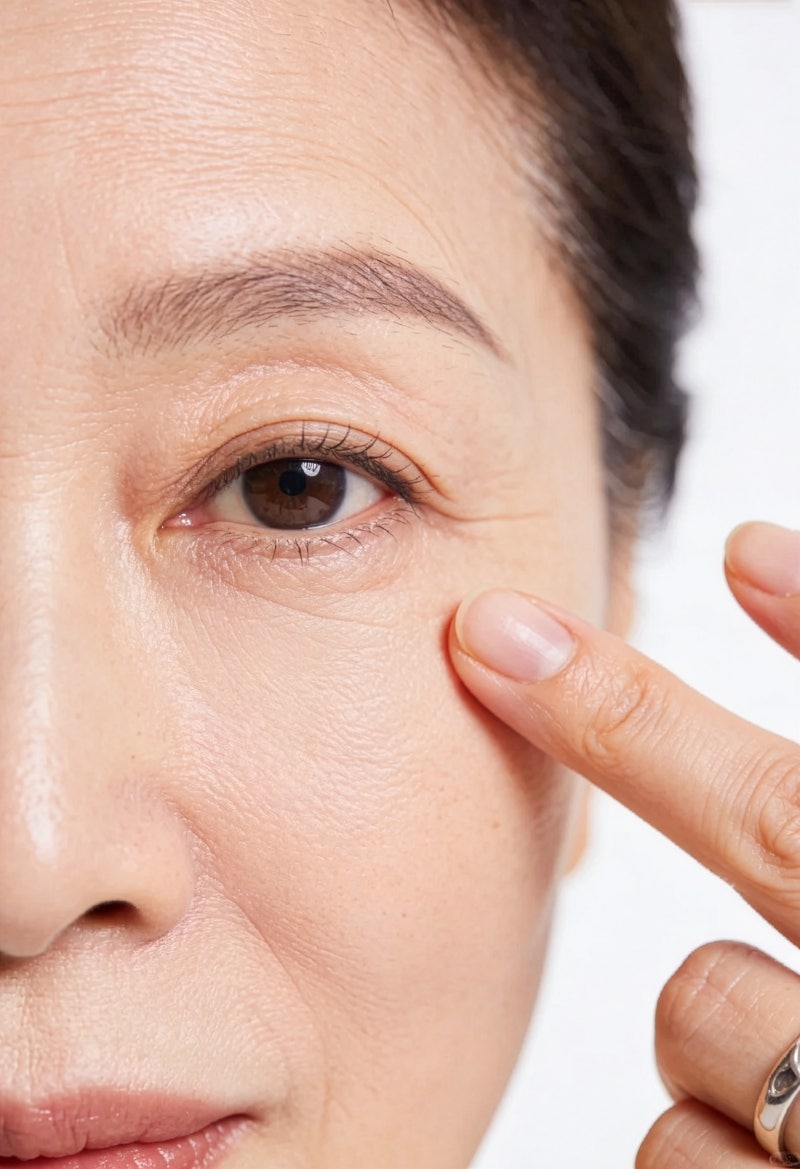
Close-up of a middle-aged woman's eye area with fine lines, as she points to the skin under her eye.
If your skin isn't as firm as it used to be and fine lines and uneven texture start to catch your eye,
moisturizing alone sometimes isn't enough.
That's why many people looking into skin boosters end up finding Gouri.
But once you start researching, you'll have more than a few questions.
“Does it hurt a lot?”, “Does it work on nasolabial folds?”, “What about side effects?”
Today, we've organized everything around these questions: Gouri's ingredients, pain, nasolabial folds, and aftercare.
What this article covers
What is the Gouri skin booster?
How is it different from a hydrating skin booster?
How painful is the Gouri skin booster, really?
Gouri for nasolabial folds: how to approach it
Post-treatment reactions and things to watch for
When to contact us without waiting
Who we recommend booking a consultation for
Gouri Skin Booster at Express Bus Terminal: frequently asked questions
1. What is the Gouri skin booster? Gouri Skin Booster at Express Bus Terminal
Gouri is a collagen booster based on liquid PCL (polycaprolactone). PCL is a biocompatible polymer that gradually breaks down in the body, and it is known as an ingredient that promotes collagen production.
Earlier PCL products came in powder form, so they required a hydration step, such as mixing with normal saline, before treatment. Gouri is a ready-to-use liquid product from the start, so it can be administered immediately without this step.
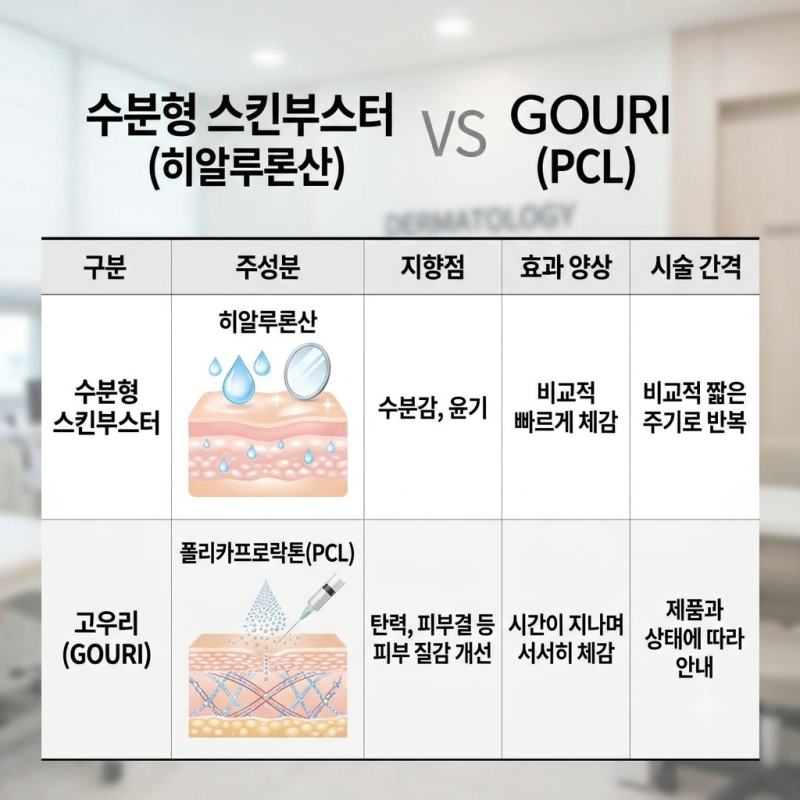
Hyaluronic acid booster vs GOURI (PCL): HA aims for moisture and glow, felt sooner; GOURI aims for elasticity and texture, felt gradually.
2. How is it different from a hydrating skin booster?
Category | Hydrating skin booster (hyaluronic acid-based) | Gouri (PCL-based) |
Main ingredient | Hyaluronic acid | Polycaprolactone (PCL) |
Focus | Hydration, radiance | Firmness and improved skin texture |
How results appear | Noticeable relatively quickly | Builds gradually over time |
Treatment interval | Repeated at relatively short intervals | Guided by product and skin condition |
If you need hydration right away, a hydrating booster is often the better fit. If you want to build firmness and skin texture over the long term, Gouri is often the better match.
Neither is better across the board; they simply serve different goals.
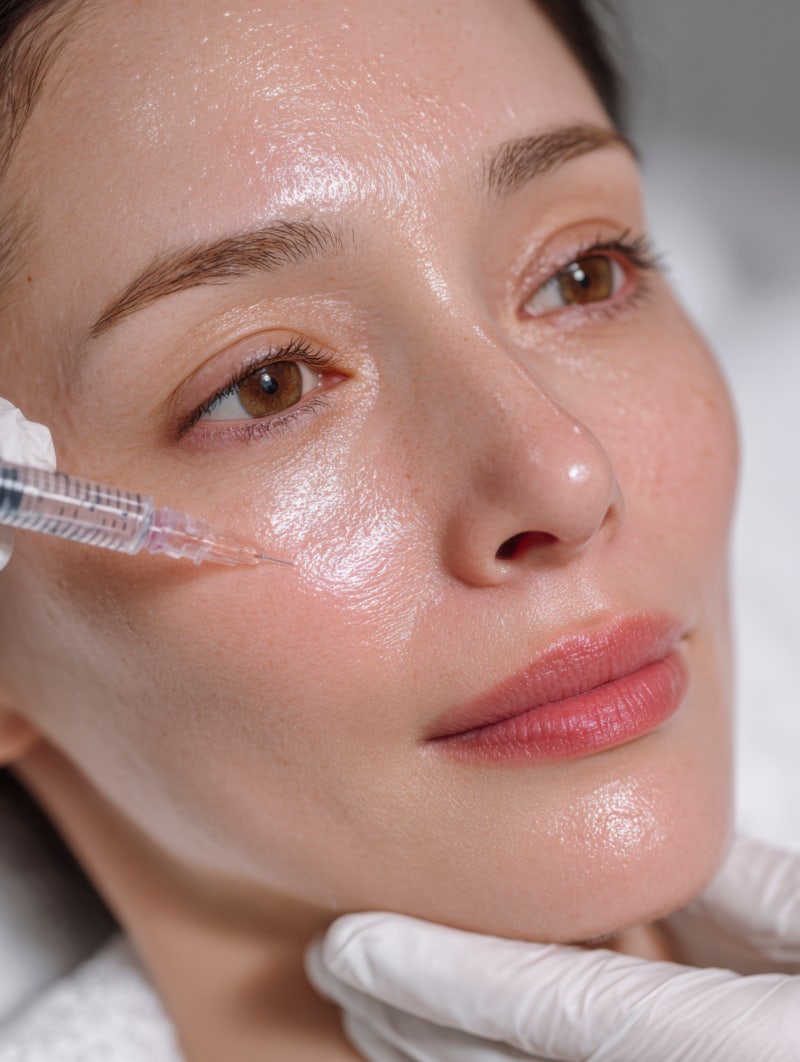
A syringe needle is applied to a woman's cheek just below the eye while a gloved hand supports her chin.
3. How painful is the Gouri skin booster, really?
Pain is the number one reason people hesitate about skin boosters.
To be upfront, pain varies widely from person to person, so it's hard to put it into a number on a scale of “this hurts this much.”
That said, we can explain the factors that affect pain.
Factors that affect pain
Treatment area: Thin-skinned areas such as the under-eyes and around the mouth often feel more sensitive.
Anesthesia method: The sensation varies depending on whether numbing cream or another anesthetic is used and how long it's left on.
Injection method: It depends on the technique (needle or cannula) and the number of injections.
Individual pain sensitivity and your condition that day
What it feels like during treatment
You may feel a sharp prick or a dull pressure at the moment of injection, and the sensation differs depending on the area.
If pain is a concern, please tell us during your consultation. We can coordinate the anesthesia method and a pace-by-pace approach with breaks along the way.
How it feels afterward
After treatment, you may experience throbbing, tightness, swelling, or redness for a few days.
According to clinic guidelines, swelling and redness often subside within 2 to 3 days, but this varies from person to person.
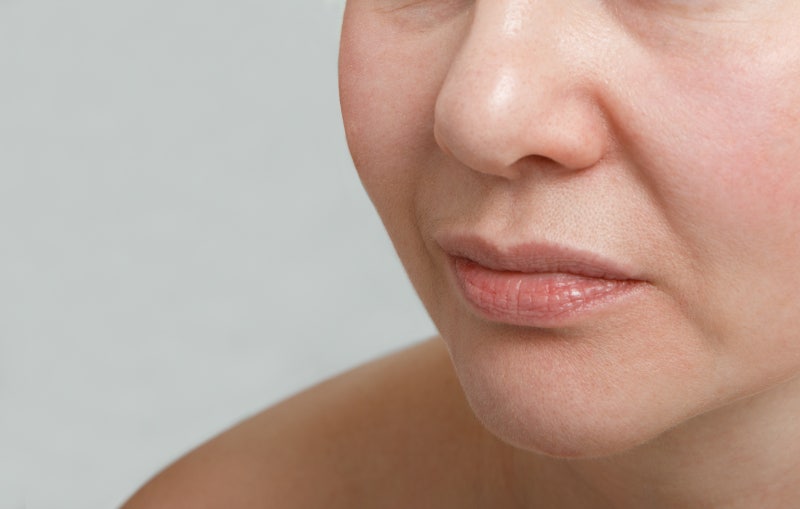
Close-up of a woman's lower face showing the lines running from the nose to the corners of the mouth.
4. Gouri for nasolabial folds: how to approach it
Nasolabial folds don't deepen for just one reason.
Loss of volume in the cheeks: sunken areas become more noticeable.
Reduced skin elasticity: thinner, sagging skin makes wrinkles look deeper.
Changes in tissue position: the upper border of the nasolabial fold becomes more defined.
However, Gouri is introduced as a product focused on improving skin quality, such as firmness and texture.
So for nasolabial folds, it helps to distinguish between the following cases:
Main cause of nasolabial folds | Suggested approach |
Reduced skin elasticity, along with fine lines and texture concerns | A collagen booster such as Gouri may be considered |
Clearly sunken volume | Volume treatments such as fillers may be a better fit |
Both concerns present | Treatments may be split up or combined in a single plan |
We can't say for certain that Gouri directly fills in the nasolabial fold.
That's why in consultations, we first check “which area, what concern, and whether the treatment suits that specific area,” rather than just asking “what results do you want?”
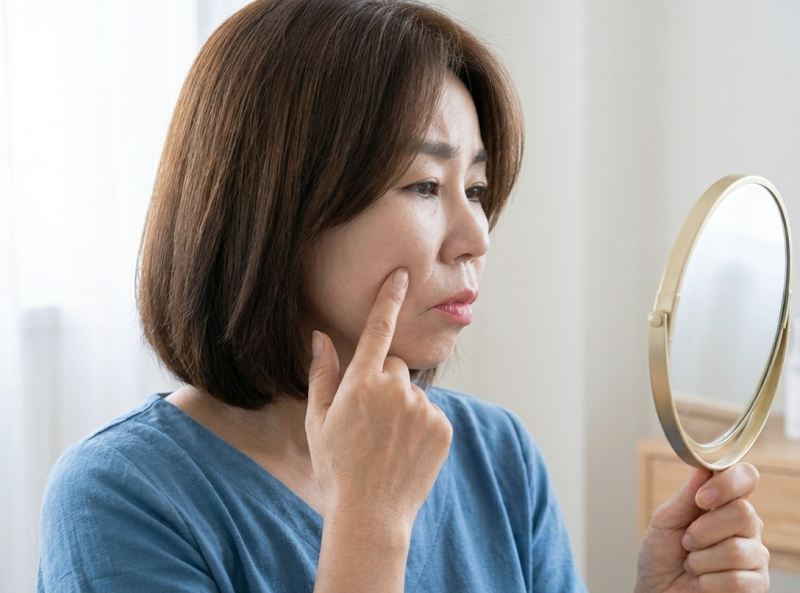
A middle-aged woman looks into a hand mirror while touching the fold beside her nose and mouth.
5. Post-treatment reactions and things to watch for
Gouri is presented as an advantage because it's a ready-made liquid product with no hydration step,
but we can't say it has no side effects at all.
Common temporary reactions
Swelling, redness, warmth
Bruising:
Throbbing, tightness
A lumpy feeling at the injection site
Aftercare guidelines
Don't press or rub the treated area hard.
Avoid saunas, alcohol, and strenuous exercise for the time being.
Please be mindful of sunscreen and moisturizing.
6. When to contact us without waiting
Pain that is severe and unlike your usual sensation
A lump that keeps growing or is painful
Redness or warmth that persists or gets worse

A doctor in a white coat with a stethoscope talks with a patient across a desk.
7. Who we recommend booking a consultation for
Those concerned about skin firmness and texture
Those who want to build up their skin over time rather than only seek one-off hydration
Those concerned about fine lines and pores at the same time
Those who find fillers daunting but are worried about the skin around the nasolabial folds
If volume has deflated significantly or sagging is clearly visible, other treatments may be a better fit.
When you come in for a consultation, please be sure to tell us about any medications you're taking, allergies, and treatments you've had before.
8. Gouri Skin Booster at Express Bus Terminal: frequently asked questions
Q1. Does it hurt a lot?
Because it varies so much from person to person, it's hard to give a number.
It depends on the area and anesthesia method, so if you're concerned, please let us know during your consultation.
Q2. Is Gouri alone enough for nasolabial folds?
It depends on what's causing the wrinkles. If reduced skin elasticity is the main cause, it can be considered,
but if volume has been lost, other treatments may be needed. We decide after an examination.
Q3. When will I start to notice results?
Results vary from person to person and tend to appear gradually, so we'll guide you as we monitor your progress.
Q4. How long do the results last?
This depends on your skin condition and the amount used, so we'll explain it during your consultation.
Q5. Will nodules form?
It's introduced as a liquid product with no hydration step, which reduces concerns about clumping,
but we can't say there is zero possibility of nodules forming. If you notice any changes, please have them checked by a clinician.