2026-11-04
Express Bus Terminal Dermatology: What to Check When Choosing a Stem Cell Clinic
A guide to choosing a stem cell clinic near Express Bus Terminal, covering how autologous blood-based treatments work, how they differ from skin boosters, and what to ask before consulting.

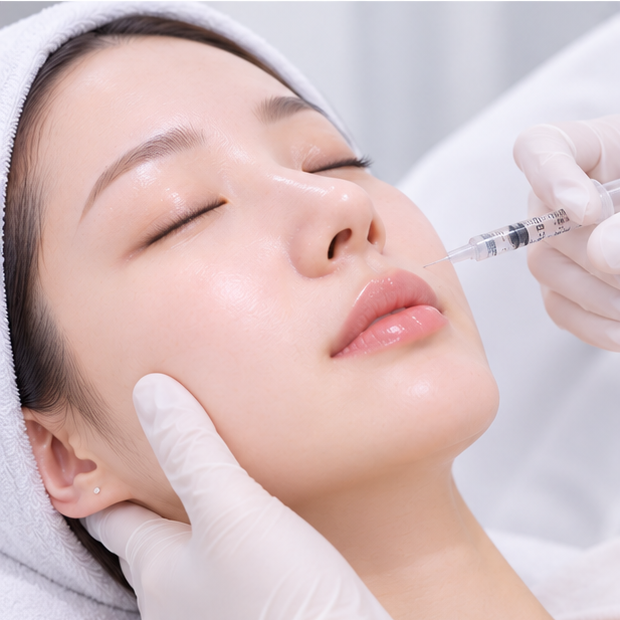
Gloved hands give an injection near the mouth of a woman lying back with a towel wrapped around her head.
These days, more and more people want to improve their overall skin condition, not just skin firmness or fine lines.
Some have already tried skin boosters or laser treatments, and while looking for a new approach, they have started exploring stem cell treatments.
However, when you search online, you'll run into many unfamiliar terms like PRP and stem cells, which can make it hard to tell the differences.
Today, we'll take a look at Express Bus Terminal dermatology and walk step by step through everything you need to know if you're considering a stem cell treatment,
from how the procedure works and how it's applied to what to check before your consultation.
Table of Contents
How does a stem cell treatment work?
Stem cell treatment vs. skin boosters: what's the difference?
Facial injections vs. IV injections: what's the difference?
What should you be careful about before and after treatment?
Criteria to check when choosing a clinic
1. How does a stem cell treatment work?
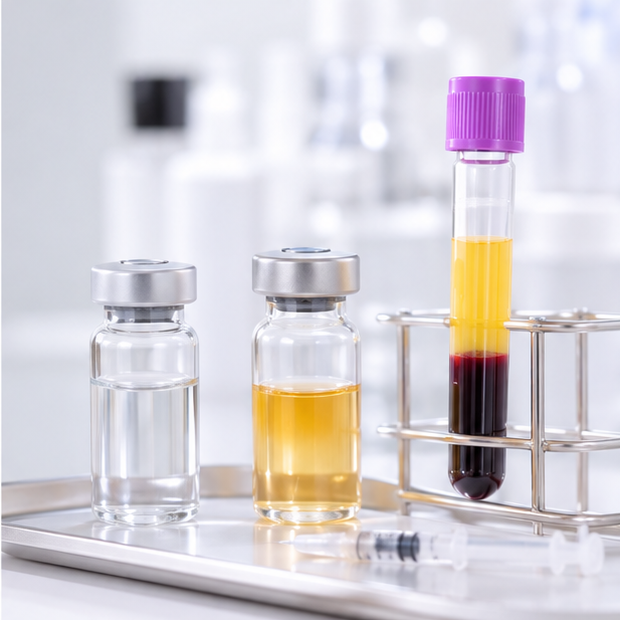
To understand stem cell treatment, it helps to first know about methods that use autologous blood.
Autologous blood, as the name suggests, means using your own blood.
Generally, the blood that is drawn is processed in a centrifuge to separate out the necessary components.
Centrifugation is the process of spinning the blood so that its components separate according to density.
Blood contains a variety of components, including red blood cells, white blood cells, platelets, and plasma,
and depending on which components are separated and how, the final product can differ.
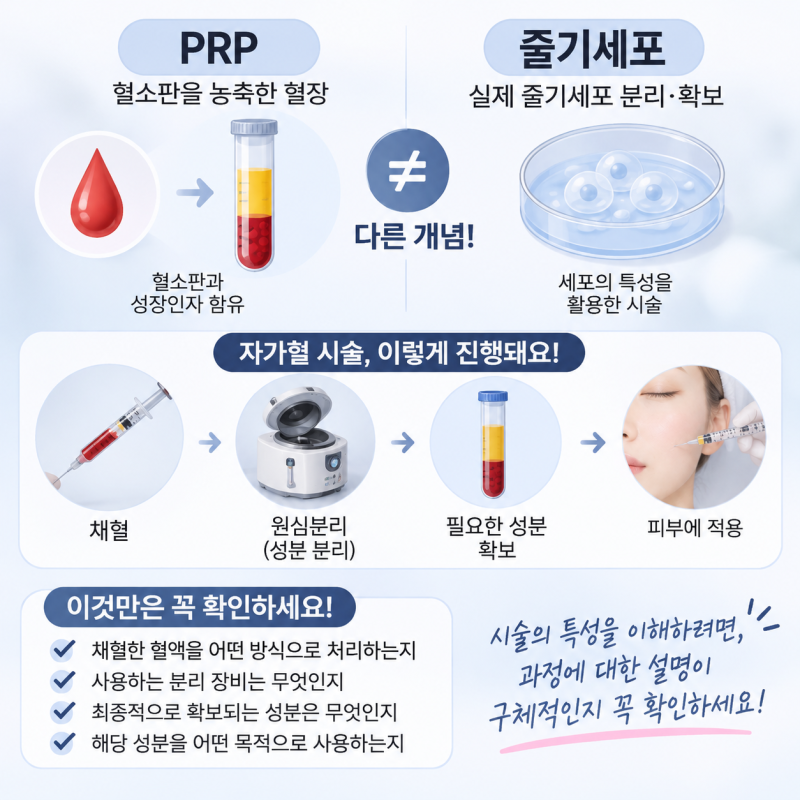
In particular, PRP is plasma enriched with platelets,
and it is characterized by its use of the various growth factors contained in platelets.
However, PRP and stem cells are not the same thing.
It isn't accurate to describe PRP as equivalent to stem cells,
so you should specifically confirm which cells and components are actually obtained in the procedure.
Therefore, when looking into related treatments at Express Bus Terminal dermatology,
rather than simply hearing that autologous blood is used, it's best to check the following:
How the drawn blood is processed
What separation equipment is used
What components are ultimately obtained
What purpose those components serve
The more specific the explanation for each of these points, the easier it is to understand the nature of the treatment.
2. Stem cell treatment vs. skin boosters: what's the difference?
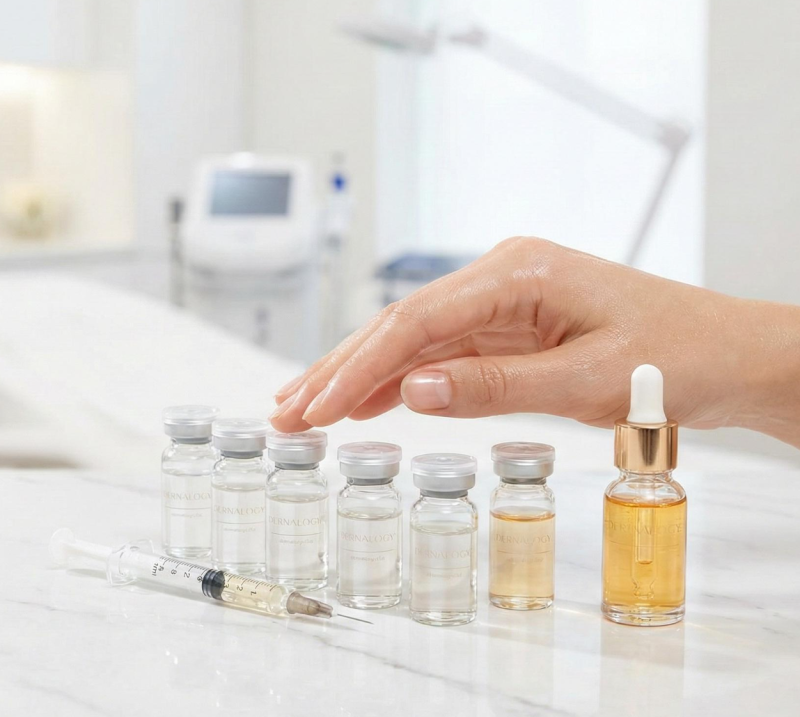
A hand reaches over a row of clear and amber vials, a dropper bottle and a syringe in a treatment room.
While looking into skin improvement, you'll come across a range of options, from skin boosters like Rejuran and Juvelook to stem cell treatments.
Both involve applying specific ingredients to the skin, so they may look similar,
but the ingredients used and the procedure itself are different.
A typical skin booster involves injecting a predetermined ingredient, specific to each product, into the skin.
Autologous blood-based treatments, on the other hand, draw your own blood,
then separate out the necessary components and use them.
Category | Standard Skin Booster | Autologous Blood-Based Treatment |
Main ingredients | Product-specific ingredients such as PN and PLLA | Components separated from blood |
Source | Manufactured product | Your own blood |
Procedure | Product prepared, then injected into the skin | Blood draw → component separation → application |
Characteristics | Ingredients and mechanisms vary by product | Varies depending on the separation method and the components obtained |
Points to check | Product ingredients and regulatory approval | Separated components and clinical basis |
It's hard to say that one is definitively better than the other.
Skin boosters also differ in their ingredients and mechanisms depending on the product,
and autologous blood-based treatments vary depending on what components are actually separated and used.
In particular, just because a treatment uses autologous blood doesn't mean it contains stem cells.
You need to clearly distinguish whether the treatment isolates and obtains actual stem cells,
or uses other blood components such as PRP.
So when looking into treatments at Express Bus Terminal dermatology,
rather than simply comparing treatment names, it's best to first check the ingredients used and how the procedure is carried out.
3. Facial injections vs. IV injections: what's the difference?
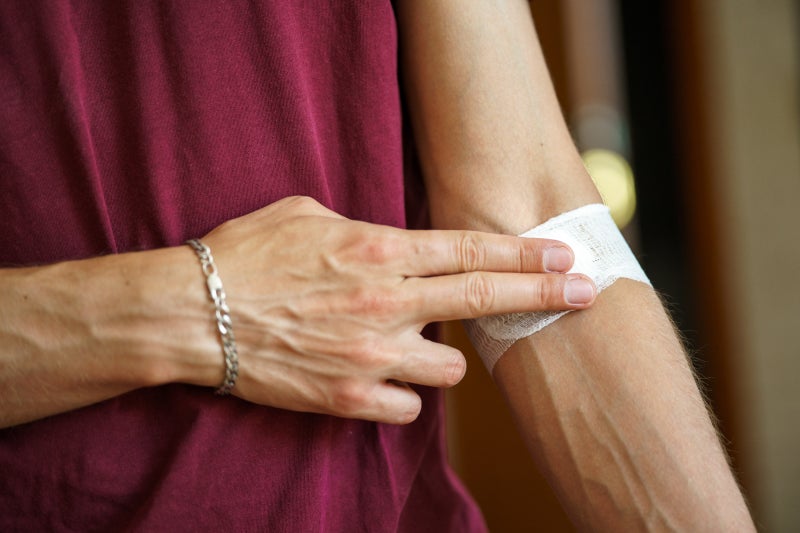
A person presses on a gauze bandage wrapped around the inner elbow, as after a blood draw.
Autologous blood treatments can also be distinguished by the route through which the components are delivered, not just by the components themselves.
The two main approaches are injecting directly into the facial skin and administering through a vein.
Category | Facial Injection | IV Injection |
Injection site | Facial skin | Veins in the arm |
Method | Injected directly into the skin | Administered intravenously |
Intended use | Applied locally to the facial skin | Uses a systemic route of administration |
Precautions | Swelling, bruising, redness | Pain and bruising at the injection site, etc. |
Facial injections are planned with consideration for specific areas of the face or the overall condition of the skin.
IV injections, on the other hand, deliver the ingredients through a vein,
so the approach itself is fundamentally different from injecting directly into the facial skin.
Importantly, a different route does not automatically mean better results or a wider area of effect.
In particular, for IV injections, you should separately confirm the safety and indications of the ingredients being administered, as well as the relevant evidence.
When consulting at Express Bus Terminal dermatology, rather than simply asking which method is better,
it's important to confirm whether the method is appropriate for your specific skin concerns and health condition.
4. What should you be careful about before and after treatment?
White round tablets scattered on a table next to a glass of water.
Even if a treatment uses your own blood, it isn't necessarily low-burden or free of side effects for everyone.
Because the process involves drawing blood, separating out components, and then reinjecting them,
your health status and any medications you take should be checked before the procedure.
In particular, please let your provider know the following during your consultation:
① Check any medications you are currently taking
② Check your current skin condition
③ Understand the blood draw and injection process
④ Consider your schedule after the procedure
Temporary swelling or bruising may appear right after the procedure,
so if you have an important event coming up, it's best to leave plenty of time.
Instructions on daily activities after treatment, such as washing your face, exercising, or drinking alcohol, vary depending on the treatment area and method, so it's best to follow your provider's guidance.
5. Criteria to check when choosing Express Bus Terminal dermatology
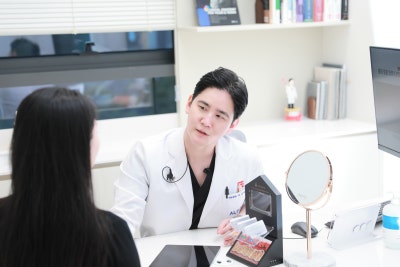
When looking into stem cell-related treatments, rather than only comparing prices or promotions,
it's a good idea to look at how the actual procedure is carried out.
In particular, each clinic may use different equipment, separation methods, and treatment scope,
so even treatments with the same name can differ in their details.
Before your consultation, check the following items:
Item to check | Questions to ask during your consultation |
How it works | Which components are actually separated? |
Equipment used | What equipment and kits do you use? |
Ingredient verification | Can you confirm the types and number of cells that were separated? |
Method | Is it a facial injection or an IV injection? |
Safety management | How do you handle infection prevention and adverse reactions after the procedure? |
Cost breakdown | Does the price include the blood draw, separation, injection, and any additional procedures? |
What matters most is a clear explanation of the specifics of the treatment you will receive and its safety, rather than the clinic's promotional wording.
Rather than undergoing several treatments at once,
it's best to first assess your current skin and health condition and then choose the method you need.
Top 5 FAQs About Stem Cell Treatment
Q1. Is stem cell treatment different from a standard skin booster?
Yes. Skin boosters inject specific product ingredients,
while autologous blood-based treatments use components separated from your own blood.
Q2. Does PRP contain stem cells?
PRP is plasma enriched with platelets, and it is not the same concept as stem cells.
You need to check which components are actually separated.
Q3. Can I resume daily activities right after the procedure?
Most people can, but swelling, bruising, or redness may appear.
Q4. How many sessions should I get?
It depends on the purpose of the treatment and your skin condition.
It's best to decide with your provider after a consultation rather than following a set number of sessions.
Q5. Can I get a stem cell treatment if I'm young?
Age alone is not enough to decide.
Your skin concerns, health status, and treatment indications should be reviewed together.
If you're looking into Express Bus Terminal dermatology,
the first step toward a satisfying treatment plan is figuring out what your skin actually needs.







