2026-10-15
Banpo Tattoo Removal: What Determines the Number of Sessions and Intervals?
Covers how laser breaks down tattoo ink, the factors that determine session count and intervals, wavelength choice by ink color, aftercare, and consultation checklist.


“How many sessions will it take to remove it completely?”
When you decide to remove a tattoo and start searching for information, this is usually the first question that trips people up.
People researching tattoo removal in Banpo also tend to weigh their decisions around the number of sessions, the intervals between them, and the possibility of scarring.
This article covers, in order, how laser energy works on tattoo pigment, the factors that determine the number of sessions and the intervals between them, aftercare, and what to check before your consultation.
How does the laser used for tattoo removal in Banpo act on pigment?
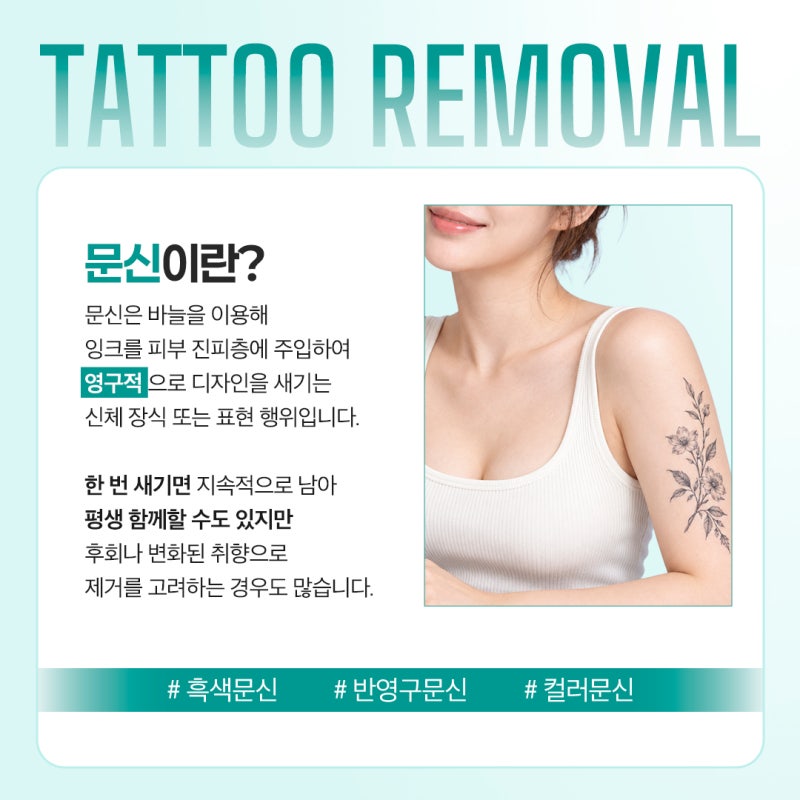
Tattoos are made by using a needle to inject pigment into the dermis, the layer beneath the epidermis.
The epidermis sheds dead skin cells on a regular cycle, but pigment that has settled in the dermis does not easily clear out on its own.
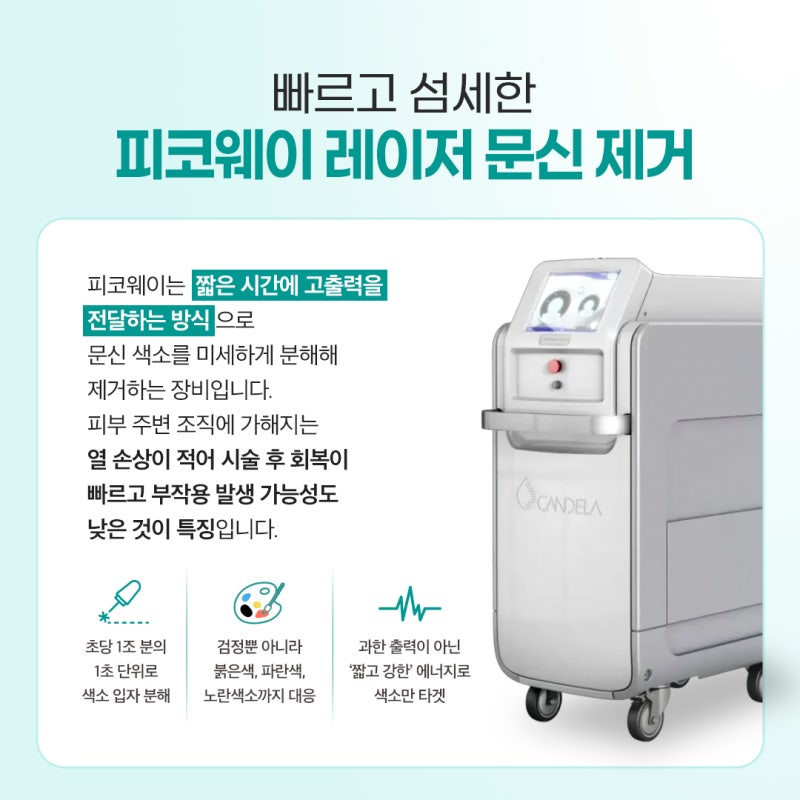
A laser works by delivering high energy to these pigment particles in very short bursts, breaking them into smaller fragments.
Common options include picosecond lasers, which deliver energy in trillionths of a second, and nanosecond Q-switched lasers. Each device differs in its wavelength setup and delivery method.
The fragmented pigment is then cleared by immune cells and eliminated from the body.
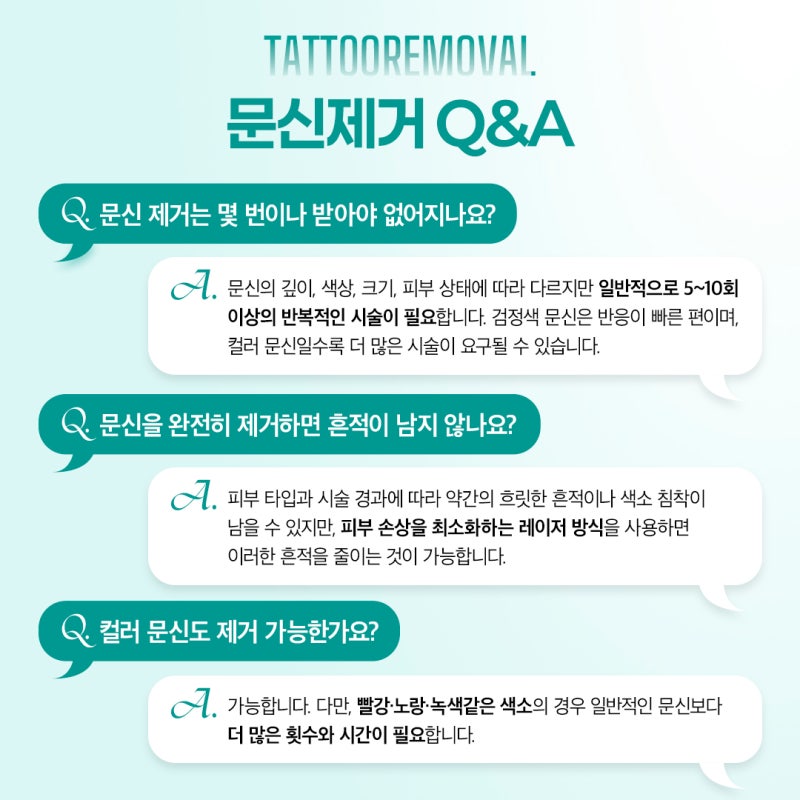
Because this process takes time, a tattoo does not disappear in one session. Instead, the color gradually fades through repeated cycles of treatment and recovery.
What determines the number of sessions?
The number of tattoo removal sessions is difficult to predict precisely before treatment begins, because several factors interact with one another.
Factor | Effect on Number of Sessions |
Pigment depth | Deeper tattoos may require more sessions |
Pigment density | Tattoos that have been layered over or are heavily saturated may take longer |
Ink color | Each color responds to different wavelengths, so response speed varies |
Body area | Blood flow and skin thickness can affect how quickly pigment is cleared |
Previous removal history | The plan may change depending on past treatment history and current skin condition |
How the tattoo was done | Professional and non-professional tattoos may have different pigment distribution patterns |
Generally, multiple sessions are often needed.
Thin, light tattoos may fade with relatively few sessions, while dark or multi-colored tattoos may take longer. Results vary considerably from person to person.
Why the wavelength changes with tattoo color
Each pigment absorbs light at a different wavelength.
The commonly observed tendencies are as follows.
Tattoo color | Wavelength range that responds relatively well | Notes |
Black / dark navy | 1064nm range | High absorption, so response is generally good |
Red / orange / brown | 532nm range | Wavelength selection is important for this color group |
Green / blue | 650~755nm range | Response may be slow |
Yellow / fluorescent / white | Limited laser response | Complete removal may be difficult in some cases |
For tattoos with multiple colors, many clinics use different wavelengths for each color rather than relying on just one. The wavelength options a clinic offers are something you can confirm during your consultation.
Are semi-permanent eyebrow and lip tattoos different?
Regular tattoos and semi-permanent makeup differ in pigment composition and injection depth.
Some semi-permanent makeup uses pigments containing iron oxide. When this component is exposed to a laser, it may turn brown or black.
For this reason, rather than treating a large area from the start, some clinics perform a small test spot first to observe the reaction before proceeding with semi-permanent eyebrow removal.
The skin around the eyes is thin and requires eye protection, so if you are considering eyebrow or eyeliner removal, be sure to ask about this specifically during your consultation.
Treatment intervals and aftercare
Sessions are commonly spaced about 4 to 8 weeks apart, but the ideal interval depends on how quickly your skin recovers and the condition of the tattoo.
Shortening the interval too much places greater strain on the skin. Undergoing the next session before recovery is complete may increase the risk of pigmentation changes or scarring.
Right after treatment, the area may become red or swollen, and blisters or scabs may form. These are normal reactions during the healing process.
It helps to keep the following in mind.
- Do not pick at scabs. Let them fall off naturally.
- Do not rub the treated area, and use the ointment or moisturizer recommended by your clinic.
- Apply sunscreen consistently and limit sun exposure.
- You may be advised to avoid saunas, strenuous exercise, and alcohol for a set period, depending on your skin condition.
What to check before a tattoo removal consultation in Banpo
Some information is worth preparing in advance, as it helps the clinic make a more accurate assessment.
When and how the tattoo was made:
Write down what you can recall about when and how the tattoo was done.
Previous removal treatments:
If you have had treatments such as laser or chemical peels, note when they were done and how many sessions you had.
Medications and skin conditions:
If you take medications that increase photosensitivity or have a skin condition, let the clinic know in advance.
Schedule:
If you have a schedule involving prolonged sun exposure or travel, this information is useful for planning the timing of treatment.
Desired outcome:
Your plan will differ depending on whether you want complete removal or a lightened tattoo that will be covered with a new design (a cover-up).
Tattoo removal is not a one-time procedure. It is a process of gradually reducing pigment in stages, in step with how quickly your skin heals.
If you are looking into tattoo removal in Banpo, it helps to first examine the current condition of your tattoo rather than focusing on predicting the number of sessions, and to consider whether you have a plan that keeps the burden manageable.
Results and recovery may vary from person to person.
3 Things People Often Overlook Before Tattoo Removal
Frequently Asked Questions About Tattoo Removal in Banpo
Q. Does tattoo removal hurt a lot?
The level of pain varies depending on the treatment area, pigment density, and individual sensitivity. It is sometimes compared to the feeling of being snapped with a rubber band.
Whether a topical anesthetic cream will be used can be confirmed during your consultation.
Q. Can I shower or wash my face right after treatment?
Gentle face washing is often possible, but you should avoid rubbing the treated area.
The specific timing varies depending on the treatment area and how your skin responds, so follow your clinic’s instructions.
Q. Can scarring remain after tattoo removal in Banpo?
Although rare, there is a possibility of pigmentation changes or scarring. The risk can increase if scabs are picked off or if the area is exposed to UV light.
Choosing the right energy settings for your skin type and proper aftercare are both important.
Q. Can I get a new tattoo over an area where a tattoo was removed?
In many cases, this is possible once the pigment has faded sufficiently and the skin has fully healed.
The exact timing depends on how much has been removed and your skin condition, so confirm it with your doctor.
Q. Can I have treatment while pregnant or breastfeeding?
In general, treatment is often postponed during pregnancy and breastfeeding.
If this applies to you, be sure to tell the clinic during your consultation.