2026-11-11
Banpo Stem Cell Treatments: 5 Things to Know If You're Concerned About Skin Aging
A guide to stem cells and skin regeneration research: basic concepts, cell types, differences from standard skin boosters, and key points to check first.
Banpo Stem Cell Treatments: 5 Things to Know If You're Concerned About Skin Aging
As we age, the changes that appear on our skin
go well beyond simply more wrinkles.
Skin is no longer as firm as it used to be,
dryness is easier to notice,
or skin texture becomes rougher,
and several of these changes can even appear together.
Behind these changes are a range of factors, including the declining function of the cells
that make up the skin and a reduction in collagen.
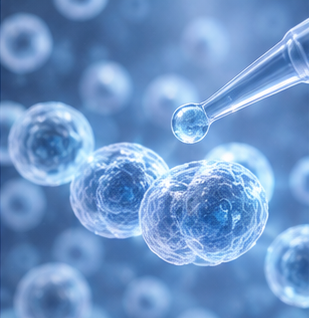
In recent years, the principles behind skin aging
have been actively studied at the cellular level.
In fact, a 2026 systematic review published on skin regeneration
(Systematic Review) analyzed nine studies
that used stem cells
and stem cell-derived materials.
These studies reported positive results for skin elasticity, collagen synthesis,
and wrinkle improvement, but
because study sizes and methods varied,
the review noted that sufficient clinical evidence still needs to accumulate.
So what exactly are stem cells,
and how are they being studied for skin regeneration?
For those looking into Banpo stem cell treatments,
let's take a step-by-step look at the basics of stem cells,
current research trends, and what to check.
📌 Table of Contents What Are Stem Cells? The Relationship Between Skin Regeneration and Stem Cells Types of Stem Cells and How They Are Used How Do They Differ From Common Skin Procedures? What to Check Before Exploring Banpo Stem Cell Treatments FAQ
1. What Are Stem Cells?
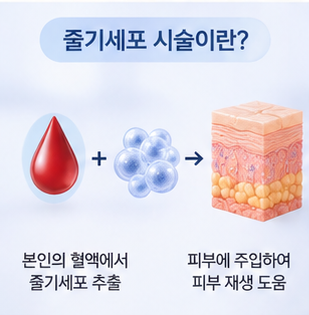
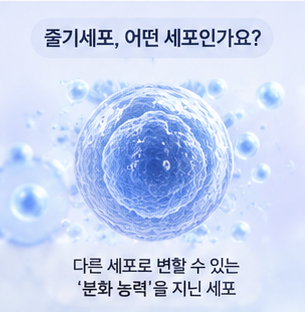
Stem cells are cells that have the ability to differentiate
into the various cell types that make up the body
and the ability to proliferate on their own.
Unlike typical cells,
they can develop into cells with specific functions,
and play an important role in maintaining and repairing tissue.
Stem cells can broadly be classified as follows.
① Embryonic stem cells
Derived from embryos, these cells can differentiate
into many different types of cells.
② Adult stem cells
These cells exist in the body tissues of adults
and are found in a variety of tissues, such as bone marrow and fat.
③ Induced pluripotent stem cells (iPSCs)
These are cells created by reprogramming already-differentiated somatic cells
to have differentiation capacity similar to that of embryonic stem cells.
In this way, stem cells are classified by their origin and characteristics,
and each has its own purpose and stage of research.
Therefore, the label "stem cells" alone
does not mean the same procedures or results can be expected.
2. The Relationship Between Skin Regeneration and Stem Cells
So how are stem cells related to the skin?
The skin is an important organ that protects the body from external stimuli
and helps maintain moisture.
However, over time, the function of the cells that make up the skin declines,
and changes occur in the production and maintenance of collagen and elastin.
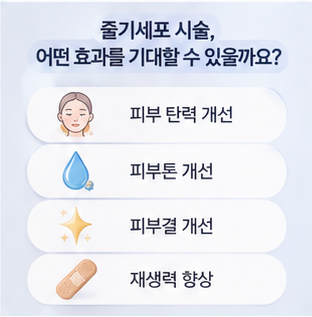
These changes can lead to reduced skin elasticity, fine lines,
and changes in skin texture.
Stem cell research is focusing on these aging processes in the skin.
In particular, mesenchymal stem cells (MSCs)
secrete a variety of bioactive substances,
and research into their role in skin tissue repair is ongoing.
The main mechanisms researchers are focusing on are as follows.

① Effects related to collagen synthesis
Researchers are studying how cellular responses related to collagen,
which is key to maintaining skin elasticity, are regulated.
② Cell-to-cell signaling
Attention is being paid to the fact that various signaling molecules secreted by stem cells
may influence the activity of surrounding cells.
③ Regulation of inflammatory responses
Some studies on mesenchymal stem cells have observed immune-regulating effects
related to inflammatory responses.
However, these effects may vary depending on the research setting, the type of cell,
and the method of application.
Effects confirmed at the cellular level cannot be assumed to produce the same results
in human skin.
3. Types of Stem Cells and How They Are Used
When you look up Banpo stem cell information, you will come across terms like autologous stem cells,
fat-derived stem cells, blood-derived cells, and others.
The terminology can vary quite a bit.
Depending on the tissue stem cells come from,
their characteristics and the methods used to isolate and process them differ.
Let's look at the most common types.
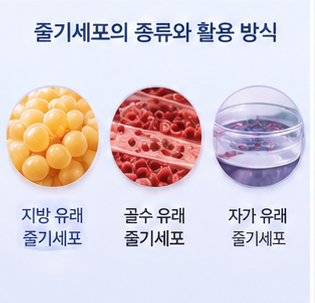
Autologous stem cells
These refer to cells derived from the individual's own body tissue.
Methods for isolating cells from fat or bone marrow are being studied.
Adipose-derived mesenchymal stem cells
These are mesenchymal stem cells that can be obtained from fat tissue.
They are used in a variety of studies related to tissue regeneration.
Bone marrow-derived mesenchymal stem cells
Cells obtained from bone marrow
are being studied in fields including tissue repair and immune regulation.
There is one important point to keep in mind here.
Simply drawing blood
does not mean that enough stem cells usable for treatment
have been secured from it.
This is because the final product varies depending on the tissue collected and the isolation method,
as well as the type of cell and its processing steps.
It is also important to distinguish between using the stem cells themselves
and using the substances that stem cells secrete.
4. How Do They Differ From Common Skin Procedures?
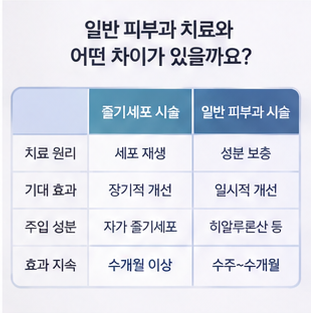
Procedures used for skin care vary widely depending on their purpose
and mechanism of action.
Common skin boosters inject hyaluronic acid or other ingredients
into the skin to hydrate and improve skin condition.
In contrast, stem cell research focuses on the cells themselves,
or on substances derived from cells,
and how they affect physiological responses in tissue.
Because the two approaches differ in purpose and mechanism,
it is difficult to say that one is simply superior to the other.
In particular, stem cells, exosomes, and cell culture fluid are distinct concepts.
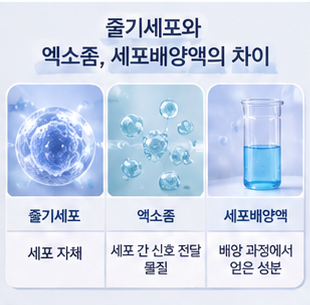
- Stem cells: cells with the ability to proliferate and differentiate
- Exosomes: extracellular vesicles involved in cell-to-cell signaling
- Cell culture fluid: a substance containing various components obtained during cell culture
Even if the names sound similar, their components, characteristics,
and intended uses differ, so it is important to distinguish them accurately.
5. What to Check Before Exploring Banpo Stem Cell Treatments
When looking into stem cell information, check not only the expected effects
but also the substances actually used and the management standards.
In particular, it is worth carefully reviewing the following points.

First, check what type of cells are used:
whether they are autologous, or sourced from fat, bone marrow, or other tissues,
and confirm which tissue they were derived from.
Second, look at how the cells are isolated and processed.
Find out how they are separated and managed,
and how their quality and safety are verified.
Third, consider what the actual purpose of use is.
Research findings on skin regeneration do not mean
that the same effects can be expected from every stem cell application.
Fourth, check whether relevant regulations and safety standards are met.
In Korea, under the laws governing advanced regenerative medicine and advanced biopharmaceutical products,
management and approval procedures apply based on the type of cell, its intended use, and how it is applied.

In particular, cosmetic-purpose use of stem cells
and advanced regenerative medicine treatments cannot be regarded as the same,
so it is essential to accurately check the relevant regulations and permitted scope.
Because stem cell research is still an active and evolving field,
effects that lack sufficient supporting evidence should not be stated as certain,
and no one should expect the same results for everyone.
6. Frequently Asked Questions (FAQ)
Q1. Are stem cells and exosomes the same thing?
No. Stem cells are cells that can proliferate on their own
and differentiate into specific cell types,
while exosomes are extracellular vesicles secreted by cells.
Because they are different substances, it is important to understand them separately.
Q2. What tissues can stem cells be obtained from?
Typically, adult stem cells
derived from bone marrow and fat tissue are being studied.
Cell characteristics and isolation processes may differ depending on the tissue.
Q3. Will skin elasticity definitely improve if stem cells are used?
No, that is not necessarily the case. Studies have reported positive findings related to skin elasticity and collagen synthesis,
but results vary between studies,
and it cannot be said that everyone will see the same results.
Q4. What is the biggest difference between stem cell treatments and standard skin boosters?
Standard skin boosters mainly deliver specific ingredients to the skin, whereas
stem cell research focuses on the cells themselves or
the physiological effects of substances derived from cells.
Q5. What matters most when looking into stem cell-related treatments?
Rather than only checking the stem cell label or expected results,
it is more important to review the type and origin of the cells actually used, how they are processed,
the intended purpose, and the relevant legal standards together.
Skin aging is not caused by a single factor,
but results from multiple physiological changes working together.
Stem cell research has been drawing attention in the field of skin regeneration
in part because research aimed at understanding these changes at the cellular level is becoming more active.
That said, research findings and real-world clinical application
should be viewed as distinct.
If you are looking into Banpo stem cell treatments, rather than focusing only on eye-catching effects,
it is worth carefully reviewing the type of cells, the intended use,
and the level of safety and evidence.