2026-11-14
Banpo-dong Hilloweave: How Is It Different from Fillers and Skin Boosters?
Explains what Banpo-dong Hilloweave is made of, how it differs from fillers and general skin boosters, who it suits, and what to know about the procedure and recovery.

As the weather has turned dry recently, fine lines can form easily.
If you're not seeing any improvement no matter how good your skincare is,
you may be wondering whether to try a skin booster like Hilloweave.
If you're looking into Banpo-dong Hilloweave, before focusing on the treatment name,
you should first check “what it’s made of and whether it suits your concerns.”
This article covers the ingredients, how it differs from fillers and general skin boosters,
and when it's a good fit versus when another option may work better.
What is Hilloweave made of?
A hyaluronic acid (HA)-based injectable developed by Korean company Hyer Corporation,
approved by the Ministry of Food and Drug Safety as a Class 4 medical device.
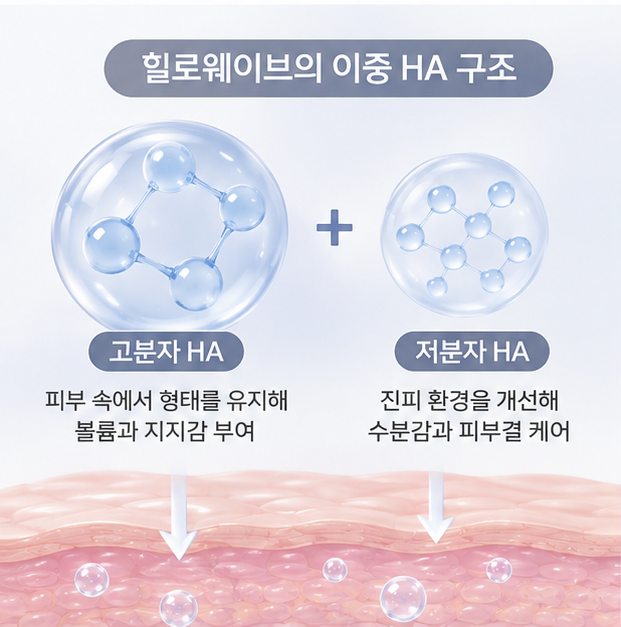
Its biggest feature is that it uses two types of hyaluronic acid with different molecular sizes together.
The manufacturer calls this DHC (Dual Hyaluronic acid Complex) technology,
and each 2cc syringe contains approximately 48mg of hyaluronic acid (24mg per 1cc).
High-molecular-weight HA: Maintains its structure within the skin to provide volume and support
Low-molecular-weight HA: An ingredient studied for its role in supporting the dermal environment to improve hydration and skin texture
Another feature is that cross-linking, which tightly binds molecules together, is minimized.
So rather than a procedure that shapes contours like a filler,
it's closer to a collagen booster, similar to hydrating glow injections, which fill the skin with moisture while supporting an environment that helps collagen production.

How does it compare to fillers and general skin boosters?
Category | Filler | General skin booster | Hilloweave |
Main purpose | Volume and shape correction in specific areas | Hydration, skin texture, radiance | Adds moisture and firmness together while managing overall skin condition |
Example ingredients | Cross-linked HA, etc. | Non-cross-linked HA, PDRN, etc. | High- and low-molecular-weight HA |
Type of change | Relatively noticeable | Minimal volume change | Natural volume change |
Typical concerns | Deep hollows, nose and chin lines | Dehydration, fine lines | Shallow cheek hollowing, thin and dry skin |
Neither is better overall; they serve different purposes.
If you need to reshape a deeply hollowed area, a filler may be the better choice,
while a general skin booster may suit you better if you only want to smooth skin texture without firming.
Because it isn't a procedure for shaping, treatment planning is based not on “where and how much to place,” but on
“how much to restore skin condition and volume.”
When to consider Banpo-dong Hilloweave:
Cases where it may be worth considering
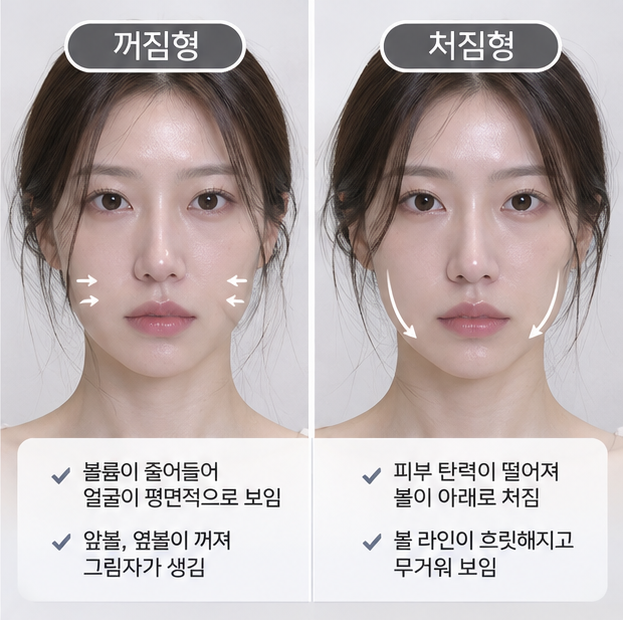
Shallow hollowing that casts shadows on the front and sides of the cheeks
Thin, dry skin that makes the face look tired
When the distinct volume of a filler feels like too much
When you want natural volume and improved skin environment at the same time
Cases where other options should be considered first
Deeply hollowed cheeks: A method with greater volume-replacing capacity may be needed.
When sagging rather than hollowing is the main cause: Adding volume may make the face look heavier, so lifting treatments such as Ultherapy or Thermage may be better done first or in combination.
Inflammation or skin conditions in the treatment area: Postpone until the area has recovered.
Hollowing and sagging are hard to tell apart by looking in the mirror alone, and the two often occur together.
An accurate diagnosis is possible through a medical consultation.
What is the treatment process?
Consultation and assessment: We check the location and depth of the hollowing, skin thickness, and any previous filler or skin booster treatments.
Volume planning: Treatment is often planned in 2cc or 4cc units depending on the area and degree of hollowing.
Anesthesia and injection: A numbing cream is applied before injection. Using a blunt-tip cannula can reduce the number of entry points.
Post-treatment check: Swelling and skin condition are checked, and you'll receive aftercare instructions.
In a Banpo-dong Hilloweave consultation, rather than the procedure itself,
the process of deciding “which areas to treat and how much to inject” has a greater impact on how you look.
Even with the same 2cc, whether it's focused on the front of the cheeks
or spread across the sides of the cheeks and around the nasolabial folds changes the facial contour.

What to know after treatment
As with any injection treatment, swelling or bruising may occur. These usually subside within a few days, though this varies from person to person.
Right after treatment, the volume may look larger due to swelling. It's best to judge the results a few days to 1–2 weeks later, once the swelling has gone down.
On the day of treatment, avoid saunas, alcohol, and vigorous facial massage.
For 2–3 days after treatment, avoid pressing or rubbing the treated area firmly. If swelling or redness lasts a long time, have it checked by your clinic.
If you have an event such as a wedding or a photo shoot, schedule your treatment with enough buffer for swelling to subside.
What does the current research show?
In 2026, the international academic journal IJMS (International Journal of Molecular Sciences)
published a preclinical international joint study led by the Department of Dermatology at Severance Hospital, Yonsei University.
In this study, fibroblast survival remained stable,
and improvements were observed in extracellular matrix (ECM) activity and antioxidant markers.
No clear inflammatory response was observed in the animal model.
However, since these results come from cell and animal studies, it cannot be concluded that the same changes will appear in human skin.
The degree and duration of actual results vary between individuals depending on skin condition and treatment area.
If you're considering Banpo-dong Hilloweave, first check the depth and cause of the hollowing,
as well as your skin thickness and condition,
then decide whether a standalone treatment or a combination with lifting is the right approach.
Frequently Asked Questions: Banpo-dong Hilloweave
Q. Is Hilloweave very painful?
A numbing cream is applied beforehand, so most people feel only a slight sting, though pain tolerance varies from person to person.
Q. How long does Hilloweave last?
Hyaluronic acid is gradually absorbed over time. Duration depends on the area, lifestyle, and skin condition, so please check during your consultation.
Q. Can Hilloweave be used on areas that have had fillers?
The answer depends on the type of filler previously used and when it was placed, so it's best to give an accurate account of your previous treatments.
Q. Can Hilloweave be used under the eyes?
The under-eye area has thin skin, so whether it's suitable is decided after assessing the shape of the hollowing and your skin condition.
Q. Can I go to work the day after treatment?
Most people can resume daily activities, but swelling or bruising may remain, so plan ahead if you have an important event.